9 September, 2026
Gengar belongs to the Ghost/Poison type; therefore, it receives typical damage from Ground, Psychic, Ghost, and Dark attacks – double damage. At the same time, it is immune to attacks of both Normal and Fighting types.

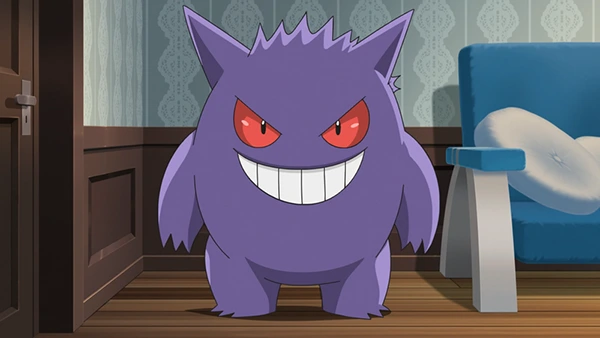
One of the most famous Pokémon in the franchise is Gengar. The Pokémon is famed for having a devilish smile, shady look, and Ghost/Poison-type. However, Gengar is introduced in Generation I as the last evolution of Gastly and is recognized as one of the most popular Pokémon across the series video games, anime, and franchise spin-offs.
Thanks to this Pokémon’s awesome nature. Due to its sinister smile, coupled with its ability to hide in shadows and play pranks on innocent trainers, it is beloved by fans. Being a Shadow Pokémon, Gengar is a Ghost/Poison-type Pokémon evolving from Haunter through trading and is infamous for stalking shadows and scaring unsuspecting individuals.
This guide will help you find out everything about Pokémon Gengar — from getting the best moveset of this Pokémon to discovering how Mega Gengar performs in battle. Thus, if you’re keen to know how Pokémon Gengar evolves from Gastly → Haunter → Gengar, the weaknesses of types in Pokémon battling, and many more, go through it.
Gengar is the third stage of evolution of the Pokémon Gastly and Haunter, and it is the Ghost/Poison type Shadow Pokémon from Generation I. Its creepy appearance has made it very popular, and its ability to blend into shadows means it is capable of sneaking up on people.
It is home to the special ability known as Cursed Body, through which its opponents might get to learn something that Gengar Pokémon can disable its opponent’s move if it is subjected to an attack. The wider Pokémon characters lineup also includes many other recognizable Pokémon personalities and designs.
| National no. | 0094 |
| Type | Ghost Poison type |
| Species | Shadow Pokémon |
| Height | 1.5 m (4′11″) |
| Weight | 40.5 kg (89.3 lbs) |
| Abilities | 1. Cursed Body |
| Experience | Depends on Game |
Overall stats of Gengar show that it is a special attacker Pokemon which has an impressive special attack base/130 special attack and 110 Speed, meaning that it is able to attack with the enemy before the enemy can attack back. Players who build competitive teams may also want to understand the Pokémon nature chart when considering how a Pokémon’s nature affects its stats.
Base Stats
| Stat | Range | ||
| At Lv. 50 | At Lv. 100 | ||
| HP: 60 | 120 – 67 | 230 – 324 | |
| Attack: 65 | 63 – 128 | 121 – 251 | |
| Defense: 60 | 58 – 123 | 112 – 240 | |
| Sp. Atk: 130 | 121 – 100 | 238 – 394 | |
| Sp. Def: 75 | 72 – 139 | 139 – 273 | |
| Speed: 110 | 103 – 178 | 202 – 350 | |
| Total: 500 | Other Pokémon with this total | ||
FAQ: Are there alternative names for Gengar such as Gangar or Ganger?
Yes. Gengar is also commonly misspelled and searched using variations such as “Gangar”, “Ganger”, and sometimes “Hengar”. Gengar is the official name of the Pokémon.
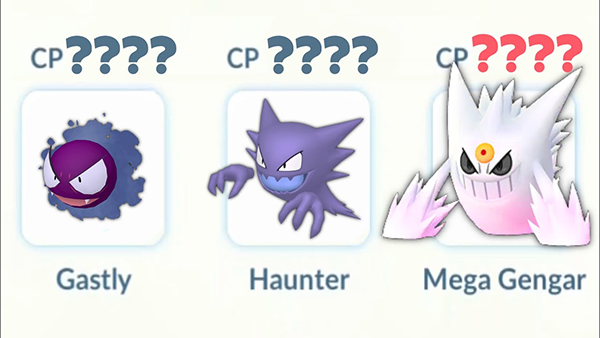
Gengar has a three-stage evolution: Gastly → Haunter → Gengar. Gastly evolves into Haunter through leveling up while Haunter needs to be traded for it to evolve. However, in new Pokémon games, there are other ways to evolve Haunter.
Gastly → Haunter → Gengar
In almost all Pokémon main games, trading Haunter or using an in-game trick allows the evolution to take place. Evolution mechanics are also a key part of many other Pokémon lines, including the Eevee evolutions.
Have a look at the Gengar evolution chart generation by generation
| Game generation | Gastly → Haunter | Haunter → Gengar |
| Gen I | Level 25 | Trade Haunter |
| Gen II | Level 25 | Trade Haunter |
| Gen III | Level 25 | Trade Haunter |
| Gen IV | Level 25 | Trade Haunter |
| Gen V | Level 25 | Trade Haunter |
| Gen VI | Level 25 | Trade Haunter |
| Gen VII | Level 25 | Trade Haunter |
| Gen VIII | Level 25 | Trade Haunter* |
| Gen IX | Level 25 | Trade Haunter* |
| Legends: Arceus | Level 25 | Linking Cord |
There are various contemporary games that allow players to get Gengar directly, or help quickly evolve Haunter, thanks to certain unique game features. The Linking Cord is an interesting alternative to the formal trading method that is very popular.
If you happen to play a game with old mechanics, the most straightforward way to evolve Gengar is to get Gastly at Level 25 → Haunter → trade Haunter → Gengar.
The fact that Gengar is a Ghost/Poison-type Pokemon that you need to remember if you are searching for Gengar weakness in all its variations, including a common misspelling “hengar weakness”. Gengar has normal weaknesses, such as Ghost, Dark, Psychic, and Ground that deal the same 2x super effective damage to the Pokemon.
Weaknesses of Gengar (2x damage)
Immune to
Resistant to
Gengar’s Ghost typing makes the Pokémon immune to Normal and Fighting attacks, and its Poison typing means that it takes the least damage from Bug and Poison moves. Fairy types are also resisted.
The simplest answer here is to utilize a Pokémon with big Ghost-, Dark-, Psychic-, or Ground-type moves. Speedy Pokémon are especially good here, since Gengar has high Speed but rather poor defenses. Trainers exploring Pokémon battles can also try competitive formats through Pokémon Showdown.
One critical thing to notice is that Ground-type moves are not always the best practical option against every Gengar, as the Pokémon’s moveset, ability, item, and the generation being played might vary the matchup. However, on a simple type-chart note, Ghost, Dark, Psychic, and Ground are the weaknesses of Gengar.
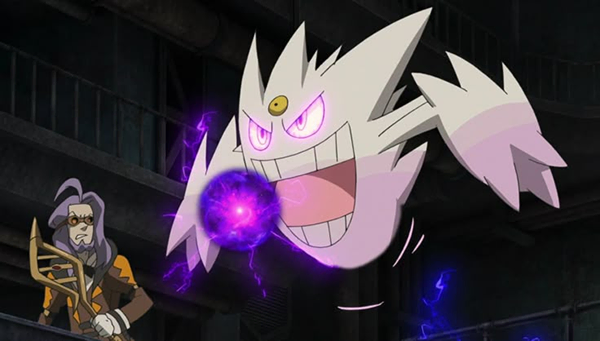
Mega Gengar is a Mega Evolution of Gengar that was first introduced in Generation VI through Pokémon X and Y and is also present in Omega Ruby and Alpha Sapphire. Mega Evolving Gengar requires Gengarite, its specific Mega Stone.
Mega Gengar retains its Ghost/Poison typing but receives a significant stat boost that raises its Base Stat Total from 500 to 600. The most significant increases in stats are in its Special Attack, which goes up to 170, and Speed, which increases to 130, making Mega Gengar a more dangerous option as a speedy special attacker.
The ability of Mega Gengar is Shadow Tag, which does not allow enemy Pokémon to run away in a normal manner. Hence, Mega Gengar is more than just a powerful attacker: it can trap its target on the battlefield and defeat it before the opponent can take any actions. Ghost-type Pokémon are immune to the effects of Shadow Tag due to mechanics present starting from Generation VI.
This is why Mega Gengar has consistently been barred from Ubers in Smogon competitive formats. Its combination is very powerful:
| Base stat | Gengar | Mega Gengar |
| HP | 60 | 60 |
| Attack | 65 | 65 |
| Defense | 60 | 80 |
| Special Attack | 130 | 170 |
| Special Defense | 75 | 95 |
| Speed | 110 | 130 |
| Base Stat Total | 500 | 600 |
| Ability | Cursed Body | Shadow Tag |
| Type | Ghost/Poison | Ghost/Poison |
In short, Mega Gengar doesn’t just threaten teams via its sheer force — it also takes away the primary counter defensive mechanism (switching). This is a rare combination, and that is why competitive formats see it as a top-tier threat instead of regular OU Pokémon.
So the important upgrades are +40 Defense, +40 Special Attack, +20 Special Defense, and +20 Speed, while HP and Attack stay the same. As a result, Gengar becomes faster and far more powerful on the special side and is able to take full advantage of its trapped opponents.
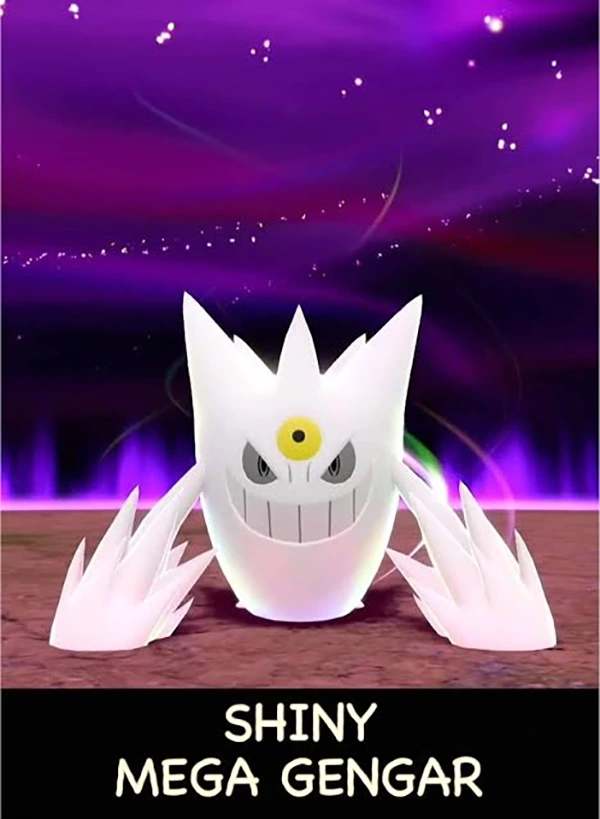
Shiny Pokémon are the Pokémon that possess a different color scheme than their regular counterparts (this fact is attributed to the color gerade at the moment the Pokémon is generated). However, even after evolving, they will remain shiny.
If you are looking for Shiny Mega Gengar—which is infamously misspelled as “shiny mega gangar”—the obtaining process is simple: first, you will need to get a Shiny Gengar, and Mega Evolve it in a properly equipped game.
A Shiny Gengar is merely an alternate form of regular Gengar, which means that you do not need to get a separate “Shiny Mega Gengar” first. Instead, you can obtain it in several steps.
The process of getting a Shiny Mega Gengar involves two major steps: the first step is getting yourself a Shiny Gengar, and the second step is Mega Evolving it.
Step1: Obtaining a Shiny Gastly, Haunter, or Gengar
You can obtain a Shiny Gengar using traditional shiny-hunting techniques depending upon your video game:
Step 2: Evolving It into Mega Form
When you have obtained a Shiny Gengar, the Mega Evolution will work in the same way as for the non-shiny version. You just need Y-Gengarite, and Mega Gengar will be created in a fight by using this ability during the battle (in those versions where Mega Evolution is enabled – for instance, X/Y, Omega Ruby/Alpha Sapphire, etc., up to the modern versions that allow Mega Evolution).
The main feature of Shiny Gengar is its different color. It is not purple like regular Gengar. It is colored lighter than regular Gengar, and this difference may be easily seen on the majority of its body and its eyes. When Mega Evolved, Shiny Gengar gets its purple color instead of regular Gengar’s deep black one, making it very attractive for collectors due to the unusual appearance.
The options for this Pokémon rely on the specific Pokémon video game being played. The Gengar Pokémon has been present in many of the main series games and is linked to the games that support its Mega Evolution. For players building a broader Pokédex, guides such as how many Pokémon are there can provide additional context about the size of the franchise.
Gengar has made quite a name for itself, as its presence is felt throughout the entire franchise in terms of video games and movies.
Gengar has a diverse moveset focused primarily on fast and powerful special attack moves and some utility moves as well.
Thanks to Gengar’s noted high Special Attack and Speed stats, it can deal considerable damage before an opponent finishes attacking. However, its relatively low defensive capabilities mean that it can be knocked out quite fast if it receives powerful attacks.
In competitive Pokémon, Gengar is used basically as a fast special attacker with support options. The Pokémon’s Ghost/Poison type adds to its number of useful resistances, while its rich arsenal of moves lets it act in different situations. Players comparing different Pokémon builds can also explore individual Pokémon guides such as Charizard and Blastoise.
Gengar has come a long way since its origin as a Shadow Pokémon inspired by a doppelgänger. After all these years, it has rightfully earned the title of one of the strongest Ghost Pokémon today. Whether hunting for the elusive shiny Gengar, completing the evolution line through trading, or strategizing around Mega Gengar’s imposing Shadow Tag ability, Gengar has proven that it can deliver rewards for putting effort into it for obtaining it.
Ready to continue filling in your Pokédex with what you have in Paldea or Kanto? Be sure to check out our other guides on Ghost Pokémon as well as guides for their evolution on Skwovet, or head on to our Mega Evolution Tier List to find out more about how Gengar compares to others in the league. You can also explore other Generation I Pokémon such as Bulbasaur, Ivysaur, and Caterpie while continuing through the Pokédex.
Gengar belongs to the Ghost/Poison type; therefore, it receives typical damage from Ground, Psychic, Ghost, and Dark attacks – double damage. At the same time, it is immune to attacks of both Normal and Fighting types.
Gastly evolves into Haunter starting at level 25. It is common knowledge that Haunter can evolve into Gengar through trading, although some games like Pokémon Legends: Arceus allow the use of the Linking Cord.
Yes, in games that allow Mega Evolution, Gengar can use a special stone to Mega Evolve into Mega Gengar with the Shadow Tag ability.
The Shiny Gengar sports a different purple hue compared to its normal form. The appearance has been somewhat modified from one Pokémon game to another, but in the more recent core-series games, the Shiny form uses a lighter shade of purple.
No, Gengar is the official name given in English. Gangar is a misspelled version most Buildup Pokémon trainers come across, and importantly, Gangar is Gengar’s Japanese name.
The optimal moves for Gengar in battle are Shadow Ball and Sludge Bomb, which utilize its Type advantage. Hex also comes in handy, especially when using the Gengar set that inflicts status conditions.
Address: 3801 Capital Of Texas Hwy N, Austin, TX 78746
Email at: info.weburic1@gmail.com
Call Us: +19707840507